Xiaomi Group has released its financial results for the first quarter of 2026, highlighting a robust performance across its business segments. The company reported a total revenue of 99.1 billion RMB (approximately $13.68 billion USD), with the automotive division contributing 19 billion RMB (approximately $2.62 billion USD).

In terms of specific business performance, Xiaomi’s smartphone segment generated 44.3 billion RMB (approximately $6.11 billion USD), while the IoT and lifestyle products segment brought in 24.7 billion RMB (approximately $3.41 billion USD). Internet services contributed 9.5 billion RMB (approximately $1.31 billion USD). The innovation segment, which includes smart electric vehicles and AI, recorded a revenue of 19.9 billion RMB (approximately $2.75 billion USD), marking a 6.9% year-over-year increase. Notably, smart electric vehicle revenue accounted for 19.2% of the total revenue. During the quarter, Xiaomi delivered 80,856 vehicles, a 6.6% increase compared to the same period last year. As of April 23, 2026, the cumulative delivery volume of Xiaomi cars exceeded 655,000 units. By March 31, 2026, Xiaomi had established 490 sales outlets across 143 cities in mainland China.
During Q1, Xiaomi’s total R&D investment reached 9 billion RMB (approximately $1.24 billion USD). In the automotive sector, the company has been aggressively enhancing its assisted driving capabilities. In March, Xiaomi officially launched its XLA cognitive large model architecture, signaling a shift in its assisted driving technology from “perception and imitation” to “understanding and reasoning.” In May, building upon the XLA foundation, Xiaomi upgraded to the Xiaomi OneVL, becoming the first in the industry to unify technical paths including VLA, world models, and latent space reasoning.

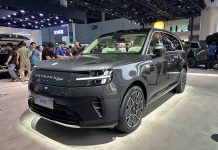
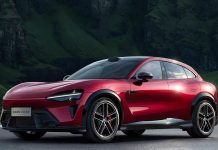
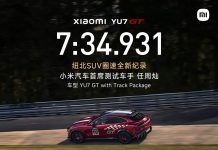
Furthermore, the premium positioning of Xiaomi’s automotive business continues to strengthen. On May 21, the Xiaomi YU7 family was updated with the launch of the YU7 Standard Edition and the YU7 GT. The YU7 GT notably set a new Nürburgring Nordschleife lap record for SUVs with a time of 7:22.755, becoming the fastest SUV in the history of the track.
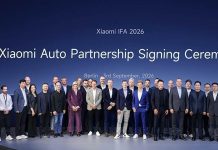
Simultaneously, Xiaomi is steadily advancing its global strategy, having officially established the Xiaomi Automotive European R&D Center to lay the groundwork for its continued expansion into international markets.