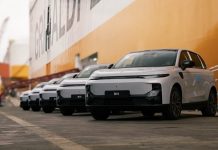
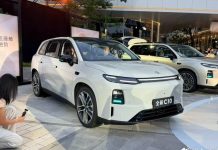
The Thai cabinet has officially approved a significant restructuring of the country’s electric vehicle consumption tax, set to take effect on January 1, 2027. Under the new policy, the consumption tax for imported battery electric vehicles (BEVs) will surge from the current 10% to 35%, while imported extended-range electric vehicles (REEVs) will also see their tax hiked from 15% to 35%. Meanwhile, new energy vehicles (NEVs) assembled locally in Thailand as completely knocked down (CKD) kits will retain their preferential 2% consumption tax rate.
This adjustment is a domestic consumption tax policy shift rather than a tariff adjustment under the ASEAN Free Trade Area framework. Its core objective is to encourage localized investment by automakers while restricting the pure completely built-up (CBU) vehicle import trade model. As a traditional automotive manufacturing hub in Southeast Asia and a frontline battleground for Chinese NEV manufacturers expanding overseas, Thailand’s new policy will profoundly impact the trajectory of Chinese brands in the region.
Data indicates that Chinese-branded NEVs produced locally in Thailand accounted for 78.8% of total tracked sales in 2025, showing that the market’s foundation firmly rests on local CKD assembly. The new policy simultaneously extends the EV 3.5 production offset rule, raising the localization offset ratio to 1-for-3 by 2027. This means automakers must manufacture three vehicles locally in Thailand for every one vehicle imported under their quota. Brands with local factories that meet the production offset requirements can apply for import quotas, allowing them to retain the lower legacy tax rate for imported models. Conversely, pure import brands lacking local investments and production capacity will face the steep 35% consumption tax starting in 2027.
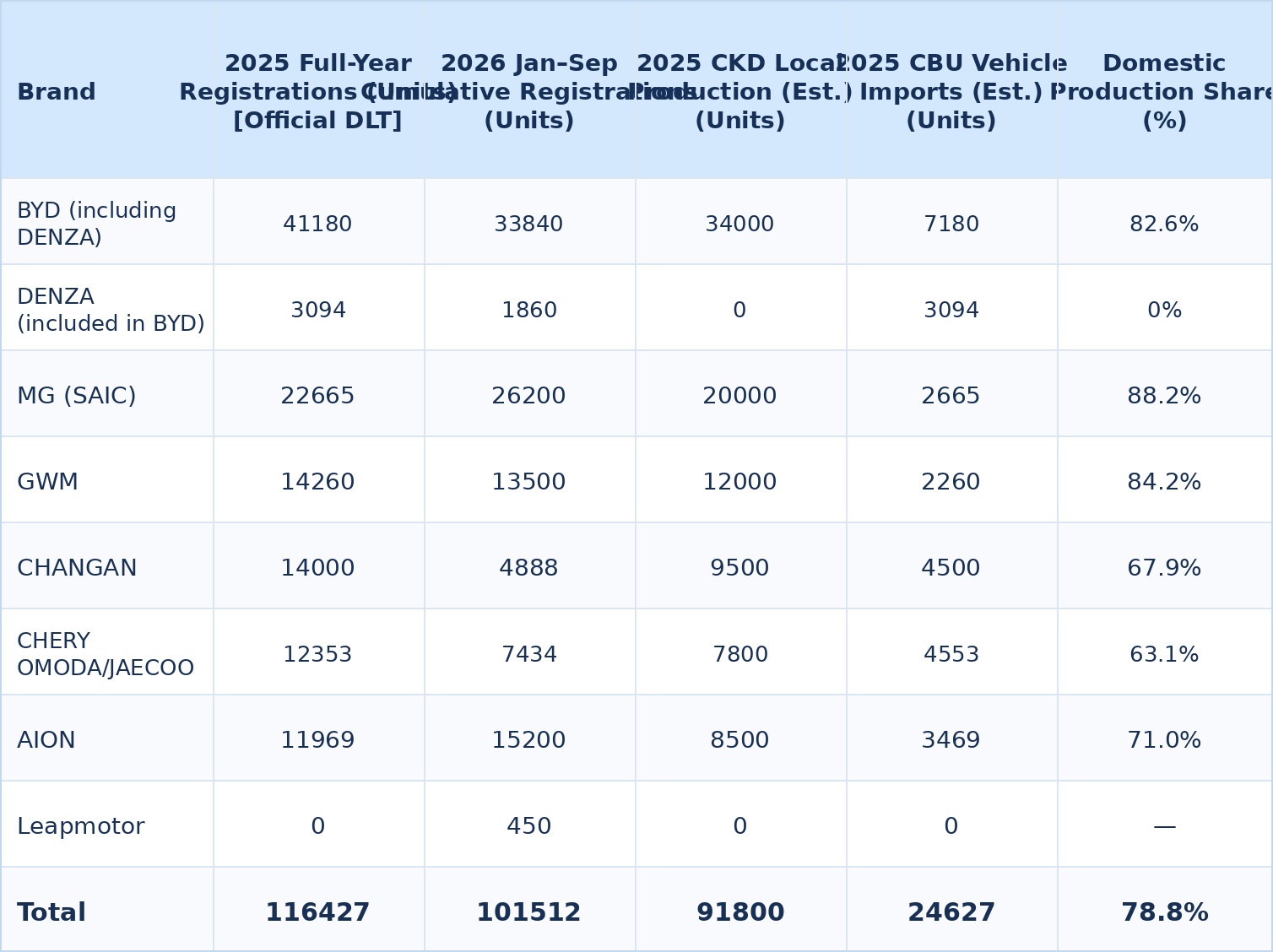
The policy also incorporates an export-elastic deduction mechanism: for every pure electric vehicle produced via local CKD and exported, 1.5 units will be credited toward the production offset ledger, with export proofs eligible for submission until June 30 of the following year.
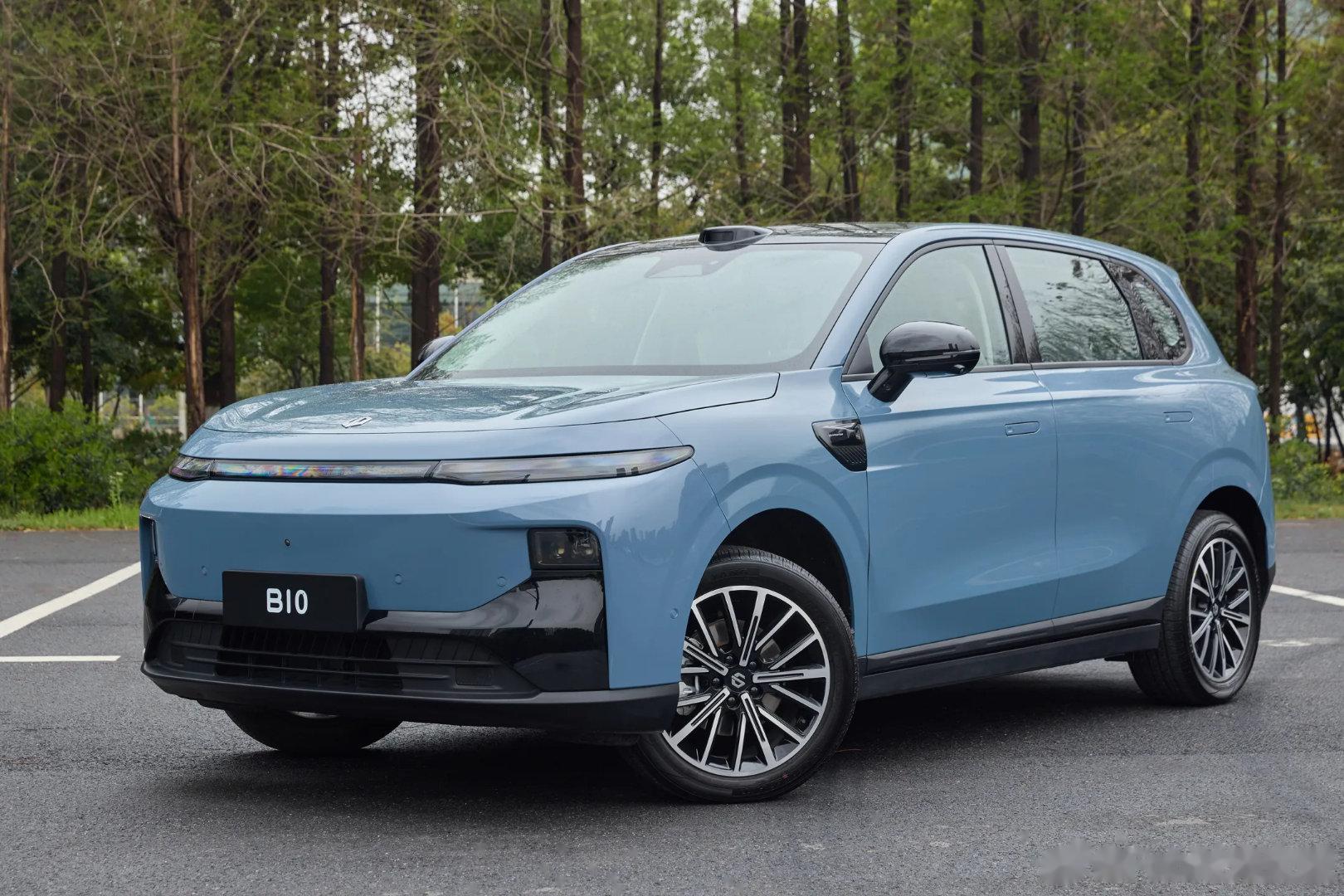
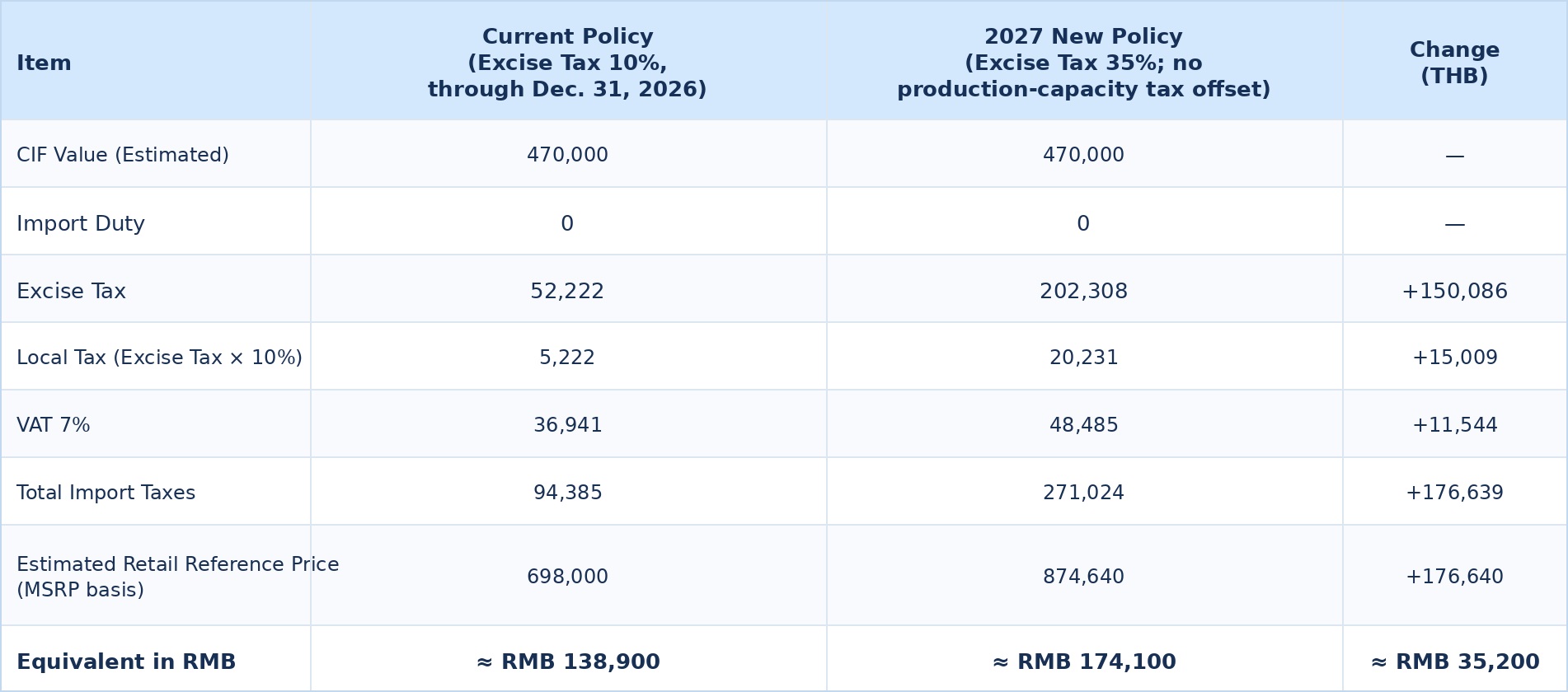
Taking the Leapmotor B10 (imported as a pure electric CBU with no local CKD production in Thailand) as an example, calculations reveal a price difference of up to 35,200 RMB (~$4,880 USD) before and after the policy takes effect. This represents a substantial financial burden for consumers and heavily undermines the competitiveness of imported vehicles.
Policy Implementation Deepens Divergence Among Chinese Automakers
Following the policy rollout, a starkly different operating environment will emerge between leading automakers that have already established local manufacturing footprints in Thailand and brands relying exclusively on imports. Tier-one brands like BYD, SAIC MG, Great Wall Motor, Changan, Chery, and GAC Aion—which have already set up plants in Rayong and Chonburi—will face limited overall impact. Their core volume-driving models are locally assembled as CKD units and remain unaffected by the tax hike. Only high-end sub-brands and newly introduced imported lineups, such as Denza and Avat, will experience higher import costs. At the same time, the production offset quota mechanism preserves an import channel for them to introduce flagship models and conduct market testing.
In contrast, brands operating purely on imports without local production facilities—such as Xpeng, Leapmotor, Geely, and NIO—will encounter severe tests. Without production offset quotas, the sharp rise in import consumption taxes post-2027 will heavily erode their terminal pricing competitiveness. These companies face a narrow path of choices: either accelerate plans to establish local manufacturing plants in Thailand or temporarily exit the market and pivot toward other Southeast Asian destinations. Industry consensus suggests that the end of 2026 will mark the final window for low-tax import customs clearance, likely triggering a temporary surge in pre-orders and bulk shipments for certain imported models.
On a deeper level, the traditional “asset-light” playbook deployed by Chinese automakers entering Southeast Asia—testing the waters with CBU imports before committing to factories if sales take off—is no longer cost-effective in Thailand. The barrier to entry has been significantly elevated, forcing new market entrants to front-load heavy asset investments while rendering the pure low-cost export model reliant on domestic capacity unsustainable. The localized factory timelines of brands like Xpeng and Leapmotor will become critical focal points for market observers.
Restructuring the Thai Auto Market: From Price Wars to Capacity and Supply Chain Competition
For the domestic Thai automotive market, this tax reform is not designed to ban imports, but rather to reshape market structure using tax levers.
In the short term, late 2026 may witness a rush to purchase imported electric vehicles. Beyond 2027, the supply of low-cost imported EVs will contract, shifting market focus further toward locally manufactured electric vehicles. Japanese automakers have long sought to balance the competitive pressures brought by low-cost imported EVs. Following the implementation of the new policy, pricing pressures on locally produced hybrids and Japanese EVs will be temporarily eased. However, due to their slower pace of electrification, Japanese brands will struggle to swiftly recapture the market share already claimed by Chinese competitors.
Over the long term, the Thai government’s goals to attract investments in batteries, electric drives, and body components will accelerate, continuously expanding the domestic EV supply chain. Nevertheless, short-term deficiencies in component maturity and higher local sourcing costs will constrain profit margins for locally built vehicles. The logic of market competition will completely shift: the era of competing strictly on domestic factory gates and ocean freight costs is over. The future of Thailand’s EV race will be decided by local manufacturing capacity, supply chain integration, after-sales networks, and localized operational prowess.
A point of caution is that several Chinese automakers have already announced expansion plans in Thailand, carrying a long-term risk of overcapacity for local EVs. Market rivalry will not disappear; the battlefield will simply shift from an “import price war” to a “local CKD model price war.”