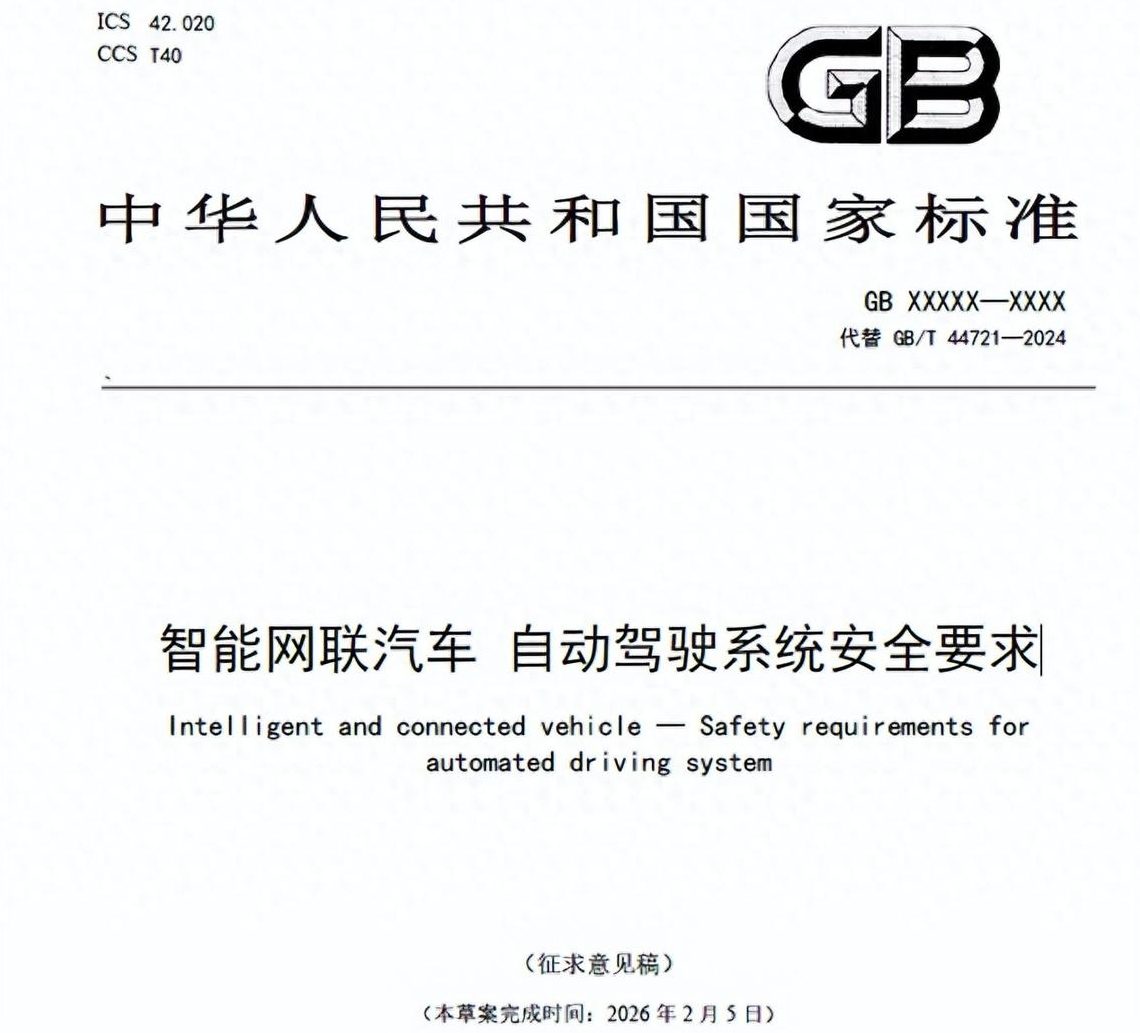
China has officially unveiled its first mandatory national standard for L3 and L4 autonomous driving systems. The draft, titled “Safety Requirements for Intelligent Connected Vehicles – Autonomous Driving Systems,” is currently open for public comment from June 17 to June 24, 2026, with full implementation scheduled for July 1, 2027.

This comprehensive regulatory framework covers passenger and commercial vehicles (M and N categories), excluding only Automated Parking Systems (APS). It mandates a rigorous “Safety Case” mechanism, requiring automakers to provide structured evidence—including hazard analysis, functional safety assessments, ODD boundaries, and raw test data—to prove their systems are free from unreasonable risks. Vehicles failing to meet these standards will be barred from the market, effectively phasing out products that rely solely on marketing hype.
Key highlights of the new standard include:
**L3 Conditional Automation: Human-in-the-Loop**
Under L3, the human driver remains the ultimate fallback. The standard mandates:
* **Triple Monitoring:** Real-time tracking of seat occupancy, seatbelt status, and driver attention.
* **Escalated Warnings:** Multi-stage alerts (visual, audio, haptic) if the driver is distracted. If focus isn’t regained within 15 seconds, the system triggers a Minimum Risk Maneuver (MRM).
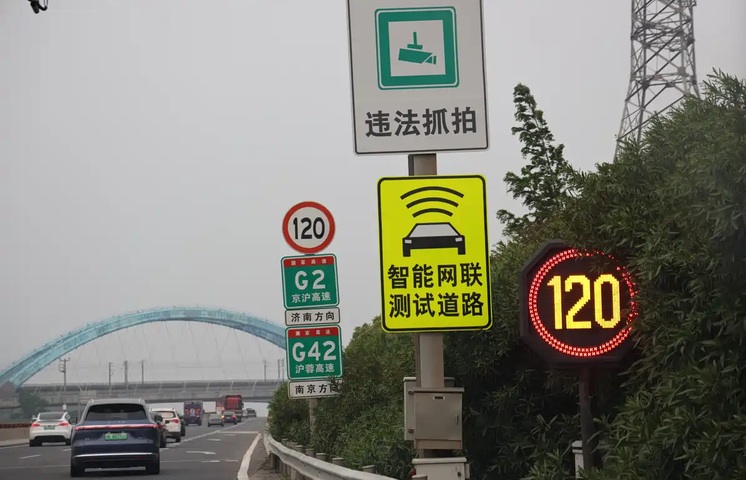
* **Performance Metrics:** At 120 km/h, the system must detect forward obstacles at a minimum distance of 130 meters.
**L4 High Automation: Autonomous Fallback**
L4 systems must operate without a human backup driver:
* **No Remote Reliance:** Vehicles must handle emergencies (system failure, obstacles, bad weather) independently; remote assistance is limited to route guidance only.
* **Enhanced Redundancy:** Stricter MRM requirements to ensure the vehicle can safely pull over or stop in its lane during failures.
**Sensor Requirements**
While the standard does not explicitly mandate LiDAR, it sets high performance thresholds for perception that effectively disqualify simple, camera-only solutions. Systems must demonstrate “degradation compensation” to handle adverse conditions like rain, fog, and glare. Automakers are required to use multi-sensor fusion—combining cameras with radar or LiDAR—to meet these safety benchmarks. Furthermore, all L3/L4 vehicles must be equipped with a compliant Data Storage System for Automated Driving (DSSAD) to record incident data for liability determination.
Existing models with type approval will have a 13-month transition period, meaning that by August 2028, any L3/L4 vehicle failing to meet these new national standards will be prohibited from sale.