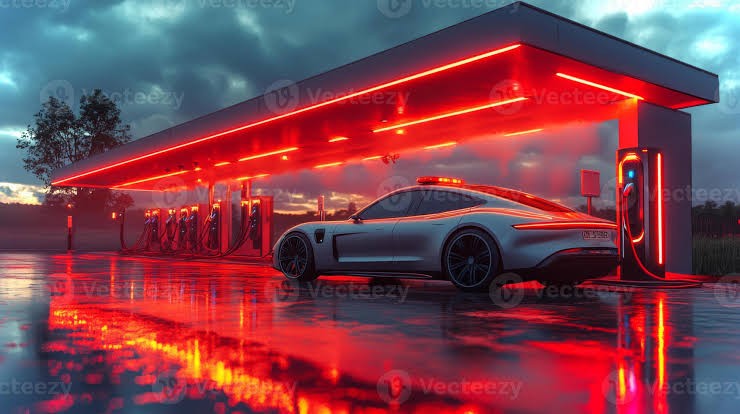
An unprecedented breakthrough has been achieved in the history of the world’s automotive industry. According to the statistics provided by the International Energy Agency (IEA), the sales of electric vehicles (EVs) exceeded 17 million units in 2024 and will make over 20% of all new car purchases. However, in some of the leading markets, the adoption has surpassed the critical 30% penetration point.
In the view of many analysts, this is considered to be the crucial tipping point for EVs from early adoption to mass-market status. The advancements in battery technology and favorable government policies aside, the visual digital channels seem to accelerate this trend further. Automaker brands and influencers who are trying to get more Instagram followers fast are now taking advantage of this trend, using short-form video content to demystify electric vehicle ownership for millions of buyers.
Global EV Sales Cross a Historic Threshold
What the 30% Market Penetration Benchmark Means
In consumer technology adoption models, reaching 30% market penetration marks the transition from early adopters to the early majority. Once a product captures nearly one-third of the active market, sales momentum no longer relies solely on early technology enthusiasts or government subsidies. Economies of scale lower production costs, while growing public familiarity reduces buyer hesitancy.
Why Analysts View This as a Tipping Point
Research from BloombergNEF indicates that crossing 30% share fundamentally shifts consumer perception. Electric mobility stops being perceived as an alternative option and becomes the primary standard. As charging networks mature and resale confidence strengthens, traditional internal combustion engine (ICE) vehicles begin losing long-term market confidence.
The Numbers Behind the EV Boom
Recent Global Sales Growth
Global EV momentum has expanded rapidly over recent years. Electric vehicles witnessed about 3 million units sold worldwide in 2020. However, by 2024, the number jumped to more than 17 million units, indicating continuous compound annual growth in manufacturing regions.
Key Markets Driving Adoption
The leading forces behind this trend are China, Western Europe, and selected countries in North America, whose regional markets continue to achieve more than 30% EV share. Through aggressive infrastructure development, local battery manufacturing, and various vehicle models, these regions have paved the way for the transition.
| Metric | 2020 | 2024 |
| Global EV Sales | 3 Million | 17+ Million |
| Share of New Car Sales | 4% | 20%+ |
| Public Charging Infrastructure | Emerging Expansion | Record Expansion |
| Consumer Awareness | Niche Interest | Mainstream Adoption |
How Instagram Became an Unexpected Driver of EV Awareness
The Rise of EV Influencers
Visual-based social media platforms have disrupted conventional auto journalism. The new generation of digital creators specializes exclusively in electric mobility content production, providing real-world range testing, acceleration tests, and charging performance evaluation.
Visual Storytelling and Consumer Trust
HD video capabilities on Instagram provide immersive EV ownership experiences. The brevity of short videos featuring silent cabins, torque performance, and user-friendly software transforms passive viewers into eager customers far more effectively than standard print advertisements.
Social Proof Is Reshaping Vehicle Purchase Decisions
User-Generated Content Builds Confidence
User-generated content (UGC) is a mark of credibility. When ordinary drivers upload spontaneous videos featuring battery performance in winter months, charging stops during a road trip, or installation of home charging stations, then they eliminate consumers’ doubts conveniently.
Digital Communities Influence Buying Behavior
Interactive comment sections and digital clubs of car owners are creating dynamic feedback systems. Hence, current key electric vehicle adoption trends shaping consumer buying decisions are peer reviews, charging network analysis, and software updates.
Why Consumers Are Choosing Electric Vehicles Faster Than Expected
Falling Battery Costs
According to BloombergNEF and Deloitte mobility reports, lithium-ion battery pack prices have fallen by more than 80% over the past decade. Decreasing pack costs allow automakers to offer longer-range vehicles at price points competitive with legacy gas vehicles.
Expanding Charging Networks
Public charging infrastructure has undergone record expansion worldwide. High-power fast chargers along major highway corridors continue eliminating range anxiety for long-distance drivers.
Sustainability and Cost Savings
Lifetime lower maintenance expenses and less costly fuel remain important incentives. At the same time, higher concern for carbon emission reductions pushes people towards using eco-friendly transport.
- Cost Reductions: The cost of battery packs has been lowered by over 80% in ten years.
- Infrastructure Expansion: Continued charging infrastructure growth reduces range anxiety of consumers.
- Social Proof: Digital marketing speeds up the adoption process and builds trust in brands.
What the Next Phase of EV Adoption Looks Like
New Technologies
Advanced technologies including solid-state batteries, 800-volt chargers, and V2G capabilities mark the new generation, providing fast charging opportunities and connection with the electricity grid.
Vehicle Ecosystems Powered by AI
AI-driven solutions manage the vehicle’s battery health, driving capabilities, and route planning, thus forming an ecosystem of a digital vehicle experience.
Market Projections Until 2030
According to McKinsey analysis and projections from ICCT, EV sales share in new passenger vehicle production might reach 50 percent and even higher in 2030 due to strict regulations and equal manufacturing conditions.
Conclusion
Going over the 30 percent mark means a permanent change in the automotive industry. Electric vehicles are now established in the mainstream market because of decreasing battery costs, a growing number of charging stations, and supportive policies. At the same time, new visual platforms of social media like Instagram have transformed consumers’ way of discovering modern technologies. Peer-to-peer validation in digital communities keeps up the unprecedented movement of the global shift to sustainable mobility.