


The AION Ray7 has officially hit the market, offering five distinct trims with official guide prices ranging from 123,800 to 153,800 yuan (approximately $17,000 to $21,200 USD). However, a limited-time promotional pricing brings the cost down to between 114,700 and 144,700 yuan (approximately $15,800 to $19,900 USD). Early buyers can also take advantage of various ownership perks, including a deposit inflation promotion, no-threshold introductory subsidies, brand-agnostic trade-in allowances, and financial subsidies.
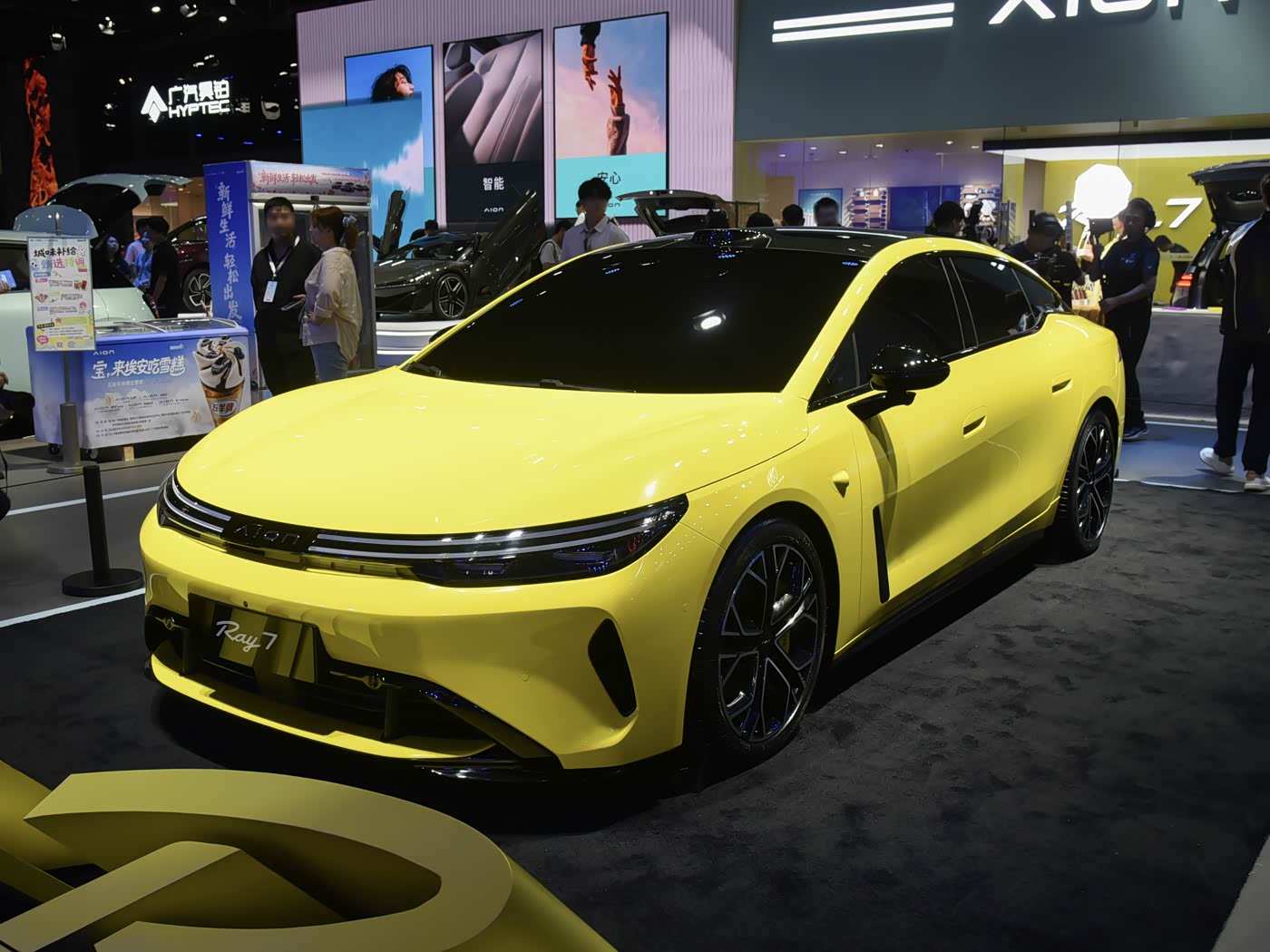
Positioned as a mid-to-large all-electric sedan, the Ray7 is built on a pure electric rear-wheel-drive platform. It integrates Huawei's DriveONE multi-in-one electric drive system and FSD adaptive damping shock absorbers. Visually, the new model adopts a brand-new design language highlighted by a 3.25-meter dual-ring full-width LED light strip featuring AION's new English lettering integrated seamlessly into the center. With a low-slung, wide-body coupe stance, the front fascia includes an active adaptive grille and aerodynamic air ducts. Overall, the vehicle benefits from 14 aerodynamic optimizations and an exclusive factory aero kit, achieving a drag coefficient of 0.22Cd.
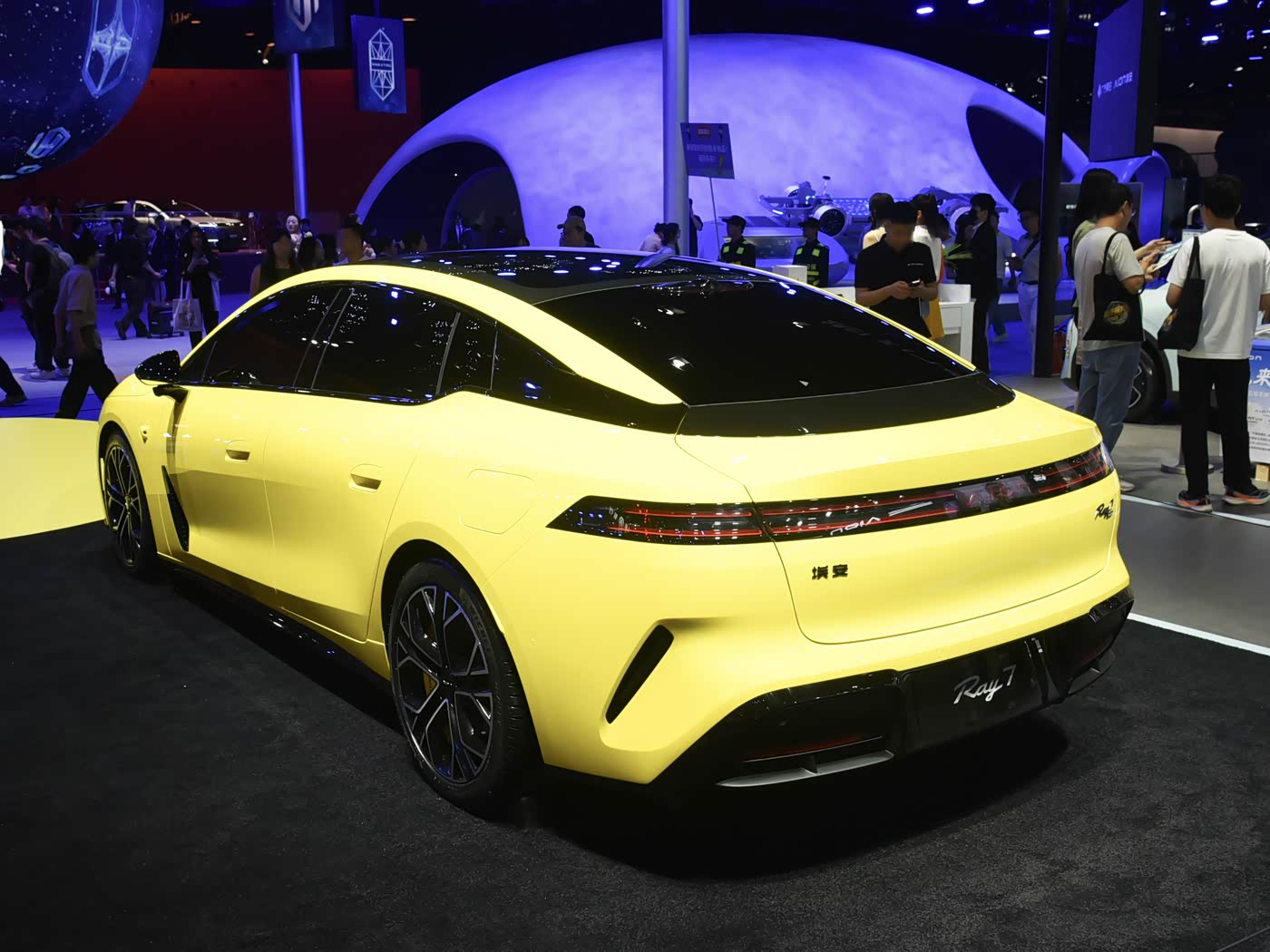
In terms of dimensions, the Ray7 measures 4,960 mm in length, 1,900 mm in width, and 1,455 mm in height, with a wheelbase of 2,920 mm. The side profile showcases a fastback silhouette with a forward-leaning dynamic posture. Notable exterior elements include frameless doors, teardrop-shaped frameless side mirrors, semi-concealed door handles, dual five-spoke wheels, Michelin PS EV high-performance tires, and lightning-yellow brake calipers.
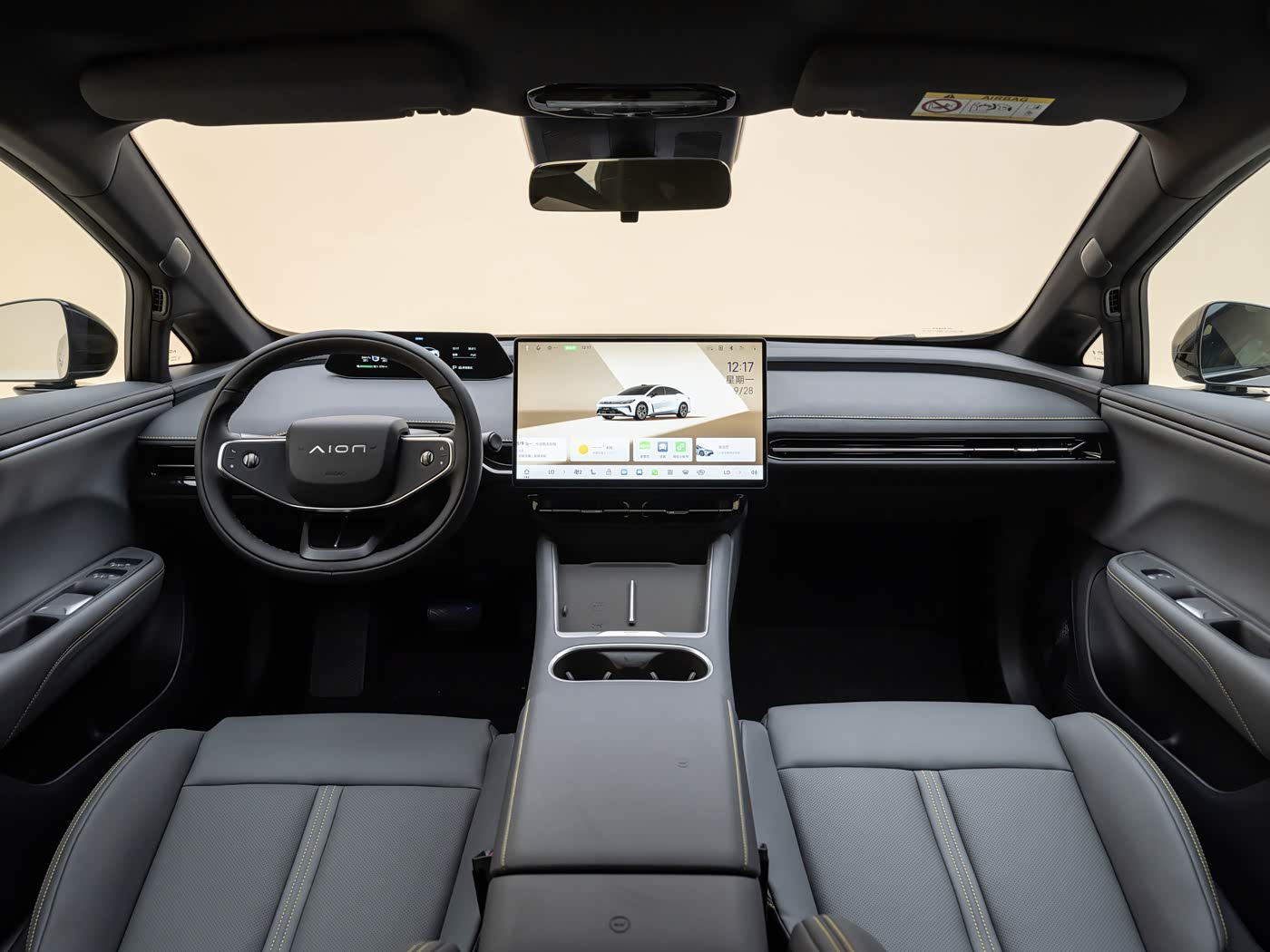
Inside, the cabin features a wraparound cockpit layout with full-width air conditioning vents, a three-spoke multi-function steering wheel, a slim LCD instrument cluster, and a 15.6-inch 2.5K floating central control screen powered by a Qualcomm Snapdragon 8295P chip. The infotainment system supports Apple CarPlay, HUAWEI HiCar, Honor MagicRing, and CarLink connectivity. Additional cabin amenities include a 50W wireless phone charger and a 7-speaker sound system. The front row comes equipped with one-piece sporty seats featuring shoulder support wings for enhanced side bolstering, one-touch/voice-activated zero-gravity reclining modes, ventilation, heating, and driver massage functions. A triple-layer silver-coated sun-shade panoramic roof is also fitted overhead, complemented by a 61-liter front trunk and a 445-liter rear trunk.


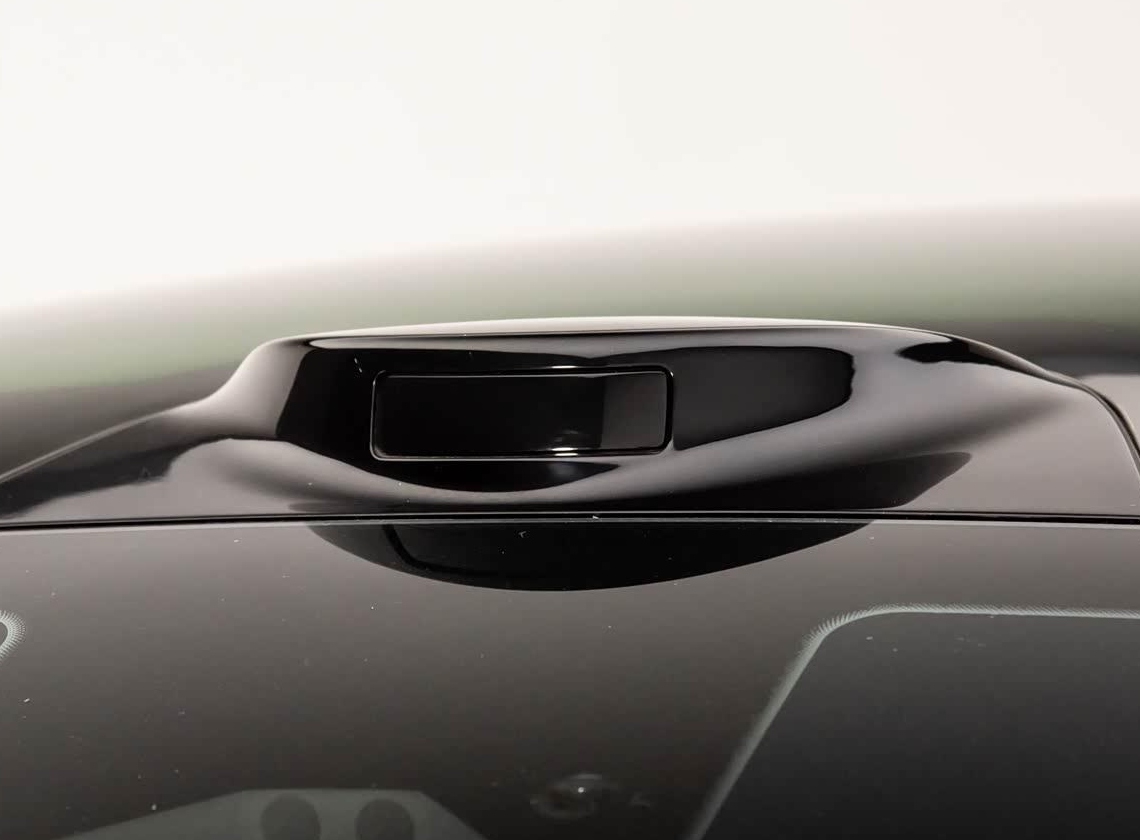
For autonomous driving and driver assistance, the Ray7 is packed with 27 automotive-grade all-view sensors, including a 192-line semi-solid-state LiDAR. Powered by GAC's GSD advanced smart driving assistance system, it supports complex urban village navigation, single-lane U-turns, obstacle routing, and continuous point-to-point parking capabilities.

Under the hood and chassis, the rear-wheel-drive sedan utilizes Huawei's DriveONE chip-level drive-braking integration architecture, controlling both propulsion and deceleration via a single chip to significantly reduce wire-control response times. Powered by Huawei's DriveONE multi-in-one single motor, it delivers a maximum output of 180 kW and a peak torque of 235 Nm. Acceleration from 0 to 100 km/h takes 7.4 or 6.9 seconds, depending on the variant. It offers CLTC-rated cruising ranges of 530 km and 702 km, with a class-leading energy consumption rate of just 9.7 kWh/100 km. Fast charging from 30% to 80% takes as little as 21 minutes. The suspension setup consists of a front double-wishbone independent suspension and a rear five-link independent suspension, paired with FSD adaptive dampers, Huawei's iTrack dynamic torque distribution system, and Huawei's DriveONE EMB fully electronic brake-by-wire system.
Editor's Review:
The AION Ray7 takes direct aim at the Geely Galaxy EV market segment, where competitors have already surpassed 10,000 monthly sales and continue to grow. The Ray7 is expected to carve out a solid market share thanks to its aggressive pricing and high value proposition. With striking styling, well-rounded configurations, and Huawei's advanced electric drive components, its core highlights include an ultra-low energy consumption of 9.7 kWh/100 km. By utilizing a smaller battery pack to achieve a maximum CLTC range of 702 km, the vehicle keeps its curb weight down to just 1,855 kg—an impressive feat for a mid-to-large sedan that translates into superior handling dynamics. This mirrors Tesla's long-standing strategy and highlights AION's competitive edge in electric powertrain technologies.