


The all-new, third-generation Audi Q7 has officially debuted, showcasing significant upgrades in design, interior technology, and configuration. For the first time, the luxury SUV Audi Q7 is available in a six-seat layout, alongside the traditional five- and seven-seat configurations. Production will continue at the Bratislava plant in Slovakia, with pre-orders in Germany opening in June and deliveries scheduled for September. The starting price is set at 87,900 euros (approximately $94,500 USD).

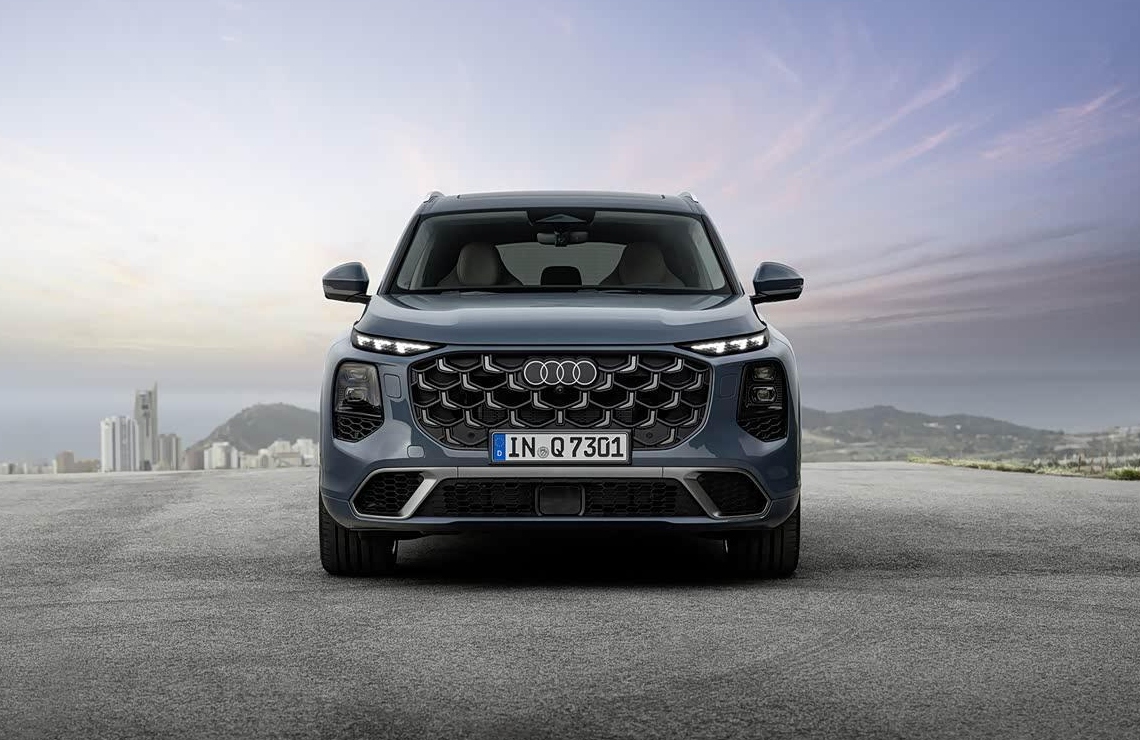
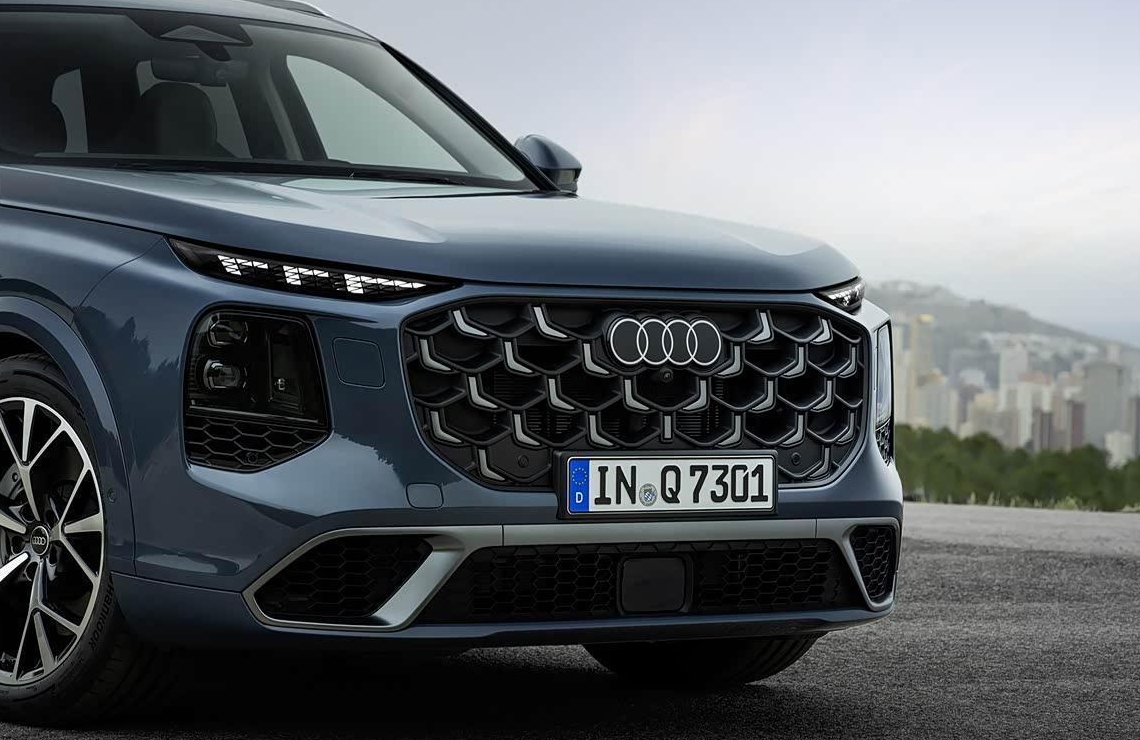
The new Q7 will be offered with either Premium Advanced or S line styling packages depending on the market. The official images feature the S line trim, which introduces a bold new front-end design. The large grille features a polygonal pattern with integrated lighting elements for enhanced recognition. The lower bumper incorporates a three-section air intake design, balancing a sporty aesthetic with a sense of stability.

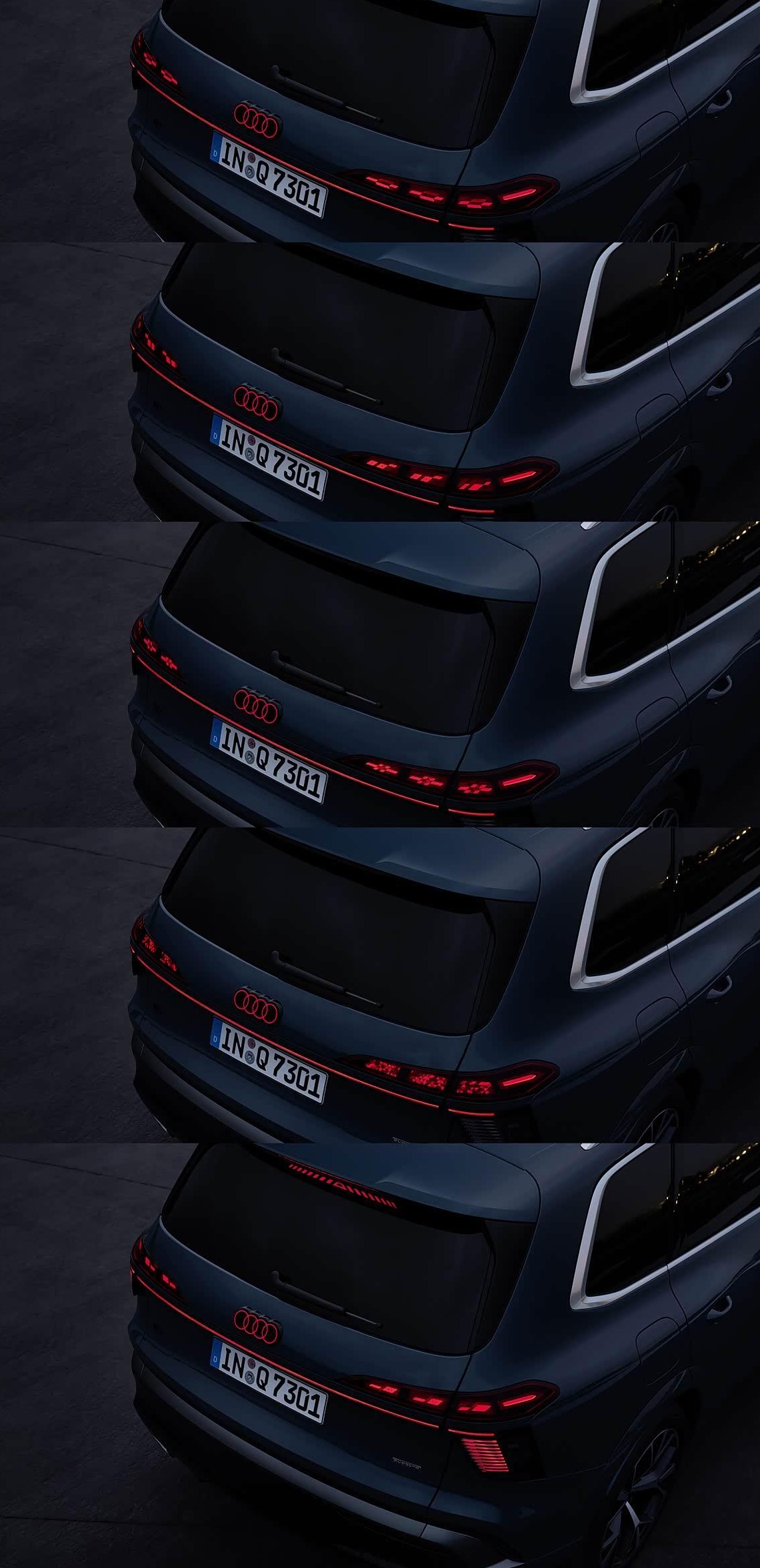
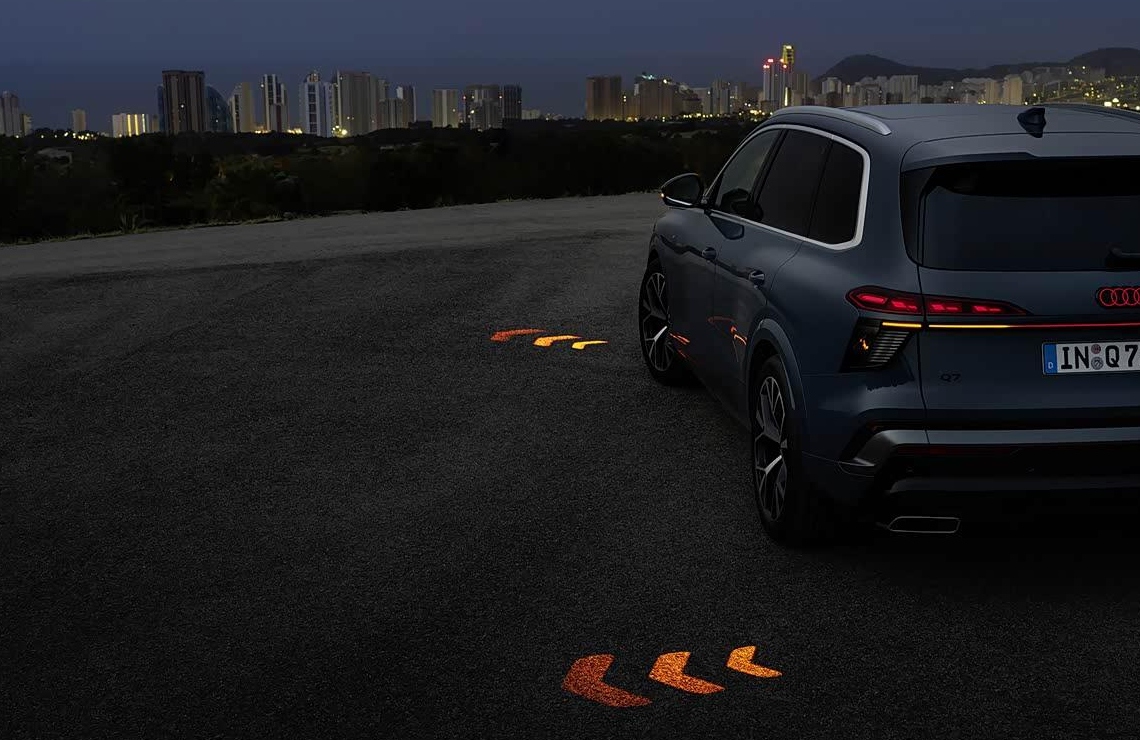
Lighting technology remains a core focus. The vehicle is equipped with high-definition Matrix LED headlights with micro-LED technology and third-generation digital OLED taillights. These units offer eight selectable digital light signatures and advanced adaptive beam control. A notable innovation is the “advanced turn signal” system, which projects dynamic turn signals onto the road surface to alert other road users. Additionally, door-mounted projectors cast a white diamond-shaped light pattern when the doors are opened.
The side profile is defined by a high waistline and muscular wheel arches. The Q7 now features electric-assisted doors for added convenience. Standard equipment includes 20-inch wheels, with optional upgrades ranging from 21 to 23 inches. Stopping power is provided by six-piston brake calipers, finished in grey as standard or optional red.
At the rear, the vehicle features an illuminated brand logo, a segmented roof spoiler, and a dual-exhaust setup. The power tailgate is standard and includes hands-free operation. Cargo capacity is generous: the five-seat model offers 670 liters (expandable to 2,075 liters), while the seven-seat version provides 581 liters (expandable to 1,980 liters).

Inside, the Q7 receives Audi’s latest Virtual Cockpit, featuring a curved dual-screen setup with OLED technology. The MMI system supports an integrated app store and an advanced voice assistant. A front passenger display is now standard across the range and includes dynamic privacy mode. The cabin also features dual wireless charging pads, electrically adjustable air vents, and an optional head-up display.
A standout feature is the Interaction Light (IAL) strip running across the dashboard, which provides welcome sequences, passenger interaction, and visual feedback linked to the audio system. Audi has also integrated a 22-speaker Bang & Olufsen sound system with 1,360 watts of power, featuring headrest speakers and vibration units in the front seats for a 4D audio experience. The panoramic sunroof features adjustable opacity across nine zones and is embedded with 78 LEDs for ambient lighting.
In terms of driver assistance, the Q7 includes automatic emergency braking, enhanced parking assist, memory parking, and trailer stabilization. A new emergency assist function can detect if the driver is unresponsive, automatically guiding the vehicle to a stop within its lane while activating hazard lights and tightening seatbelts.
In the European market, the powertrain lineup focuses on diesel engines paired with a 48V mild-hybrid system. The V6 engine is available in two outputs: 180kW (500 Nm of torque) and 220kW (630 Nm of torque). The MHEV plus system provides an additional 18kW boost. Power is managed by an 8-speed automatic transmission and the quattro all-wheel-drive system. The chassis features adaptive air suspension (capable of lowering the vehicle by 30mm), electronically controlled dampers, and rear-wheel steering.